


martes, 27 de septiembre de 2011
jueves, 22 de septiembre de 2011
Back Pay For Slavery
–

This is how the Act opens: “Whereas divers Persons are holden [held] in Slavery within divers of His Majesty’s Colonies, and it is just and expedient that all such Persons should be manumitted and set free, and that a reasonable Compensation should be made to the Persons hitherto entitled to the Services of such Slaves for the Loss which they will incur by being deprived of their Right to such Services . . . ;” etc, etc.

Laura Facey Cooper monument
When I talk about ‘wicked white people’ I don’t mean specific individuals who have done me personal wrong. I’m not speaking about singular acts of evil. It’s a far bigger issue. What concerns me is the collective crimes against humanity committed by gravalicious people who consider themselves absolutely entitled by God and nature to dominate the world. In many instances, these self-proclaimed rulers just happen to be white.

Crocodile dance mask from the Torres Strait Islands in a current exhibition at the British Museum
I know I’m going to be accused of racism for exposing ‘wicked white people’ to public scrutiny in this way. But that’s just another ploy of ‘wicked white people’ and their collaborators to perpetuate mental slavery. It’s racism to talk about racist behaviour. But actual racist behaviour is not racism. It’s just human nature. What an irony!
Justice versus expediency
So let’s say instead that ‘nice and decent’ white people agreed that it was “just and expedient” to set the enslaved free. But the yoking of justice and expedience in the Act for the Abolition of Slavery reveals the central philosophical and practical dilemma at the heart of the emancipation enterprise.
Justice seemingly puts emancipation on solid moral ground. Expedience erodes all claims to moral authority. It was expedient to emancipate enslaved Africans because plantation slavery had become an expensive proposition. The substitution of beet for cane turned West Indian sugar into a rather sour deal.
After centuries of mostly verbal outrage – incessant talk, talk, talk about ‘wicked white people’ – we, the collective victims of transatlantic slavery, must finally decide to take legal action in the largest class-action suit in the history of the world. This is a truly wonderful idea. Not the wishy-washy, everyday sense of ‘wonderful’, meaning simply ‘great’; it’s the mind-blowing, original meaning of the word: full of wonder.
 Five hundred years after the rape of the body and land of the original inhabitants of this part of the world; five hundred years after the violent uprooting and enslavement of millions of Africans, we, their descendants, both native and immigrant, must lay claim to rights of reparation.
In the sweet by and by
For many Africans in the Diaspora, it is in religion that we find hope for reparations. The Christian religion seems to recommend long-term investment in the celestial stock market. The concept of reparations has best been expressed in pious hymns like this: “In the sweet by and by I’ll have a mansion so bright and so fair, won’t it be glorious when I get there in the sweet by and by?” God will repair the breach. God is the ultimate Human Rights Arbitrator.
 Then we have those Africans who want hard cold cash in the here and now. Think of the title song from the movie The Harder They Come: “They tell me bout the pie up in the sky waiting for me when I die. But between the day you born and when you die, they never seem to hear even your cry. So as long as the sun will shine, I’m gonna get my share, what’s mine. The harder they come, the harder they fall, one and all.”
That’s an excellent anthem for the Reparations Movement, the Garveyism of our times. It’s the same kind of daring that made Marcus Garvey conceive the Universal Negro Improvement Association and Communities League: a global movement of African peoples who see themselves as having a shared history and a common destiny.
 And don’t think it’s a joke. With derisive laughter cynics like to say, ‘when you get the money you can check me.’ But the Jews got compensation from the Germans; Japanese-Americans got compensation for the atrocities committed against them. Why not Africans? I’d like to know what, exactly, our National Commission on Reparations is doing about it.
If you think that after five hundred years it’s now too late for reparations, just remember Psalm 90:4 in which David, himself a Jew, converses with the Supreme Arbitrator: “For a thousand years in thy sight are but as yesterday when it is past.” Come to think of it, all we’re really talking about is half a day’s back pay.
jueves, 8 de septiembre de 2011
Día del Negro y la Cultura Afrocaribeña
–

Día del Negro y la Cultura Afrocaribeña
• Esta fecha se celebra en Costa Rica desde hace 30 años pero hasta hace una década ha tomado mayor relevancia gracias a la creación del Festival de la Cultura Negra
En la historia de Costa Rica existen dos épocas de gran relevancia en la cual se menciona la llegada y el aporte de la población afrocaribeña. • Esta fecha se celebra en Costa Rica desde hace 30 años pero hasta hace una década ha tomado mayor relevancia gracias a la creación del Festival de la Cultura Negra
La primera se da durante la época de la conquista y colonización de América, época en la que llegaron a Costa Rica los primeros africanos ante la baja en el número de indígenas.
La segunda fue durante la construcción del ferrocarril al Atlántico cuando arribó el primer barco a suelo nacional con casi mil afrocaribeños procedentes en su mayoría de Kingston, Jamaica. Para 1927 este número ascendió a 20 mil, lo cual representaba el 55% de la población limonense de ese entonces.
Con el objetivo de reafirmar el aporte de la cultura afro-costarricense al país, el Sindicato de Educadores (SEC) impulsó a inicios de los 80s el decreto para que se celebrase el 31 de agosto el “Día del Negro”.
Se escogió esta fecha en conmemoración de la “Primera Convención Internacional sobre la Situación de los Negros”, la cual se llevó a cabo un 31 de agosto de 1920 en el Madison Square Garden de Nueva York.
Este evento figura como uno de los antecedentes fundamentales en la lucha por el respeto y contra la exclusión de la población afro descendiente en el mundo.
martes, 6 de septiembre de 2011
Limon Roots Awards 2011
–
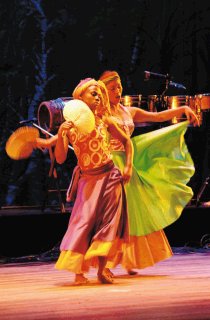
Limón Roots Awards vivió fiesta musical
 Variedad La celebración reunió estilos musicales muy distintos como reggae , socca , calipso y gospel en el Teatro Melico Salazar
El público salió bien contagiado por el sabor afrocaribeño que reinó en la edición 2011 de los Limón Roots Awards, celebración que se realizó el viernes en el Teatro Melico Salazar.
Por casi tres horas desfilaron sobre el escenario artistas internacionales de Barbados, y Honduras. Junto a ellos estuvieron varios representantes locales de la cultura limonense.

Además, el Anya de barbados y su grupo pusieron punto final con un tema en el que invitaron al escenario a todos los artistas.
miércoles, 20 de julio de 2011
Mujeres Afro descendientes de Panamá, Costa Rica y EEUU
–
Entrevista con tres abogadas afro descendientes en Washington, DC, sobre la realidad de sus comunidades en Costa Rica, Panamá, y los afro latinos en Estados Unidos, luego de un curso de capacitación sobre la influencia de la OEA en las comunidades afro descendientes del continente.
[ Read More ]
lunes, 4 de julio de 2011
El Caribe también se puede comer
–
En el corazón de Cahuita, hay restaurantes especializados en gastronomía caribeña; además, se encuentran lugares con fusiones

Melvin Molina 09:58 a.m. 30/06/2011
El Caribe se puede disfrutar de un solo bocado, ¿no lo cree? Es tan sencillo como visitar alguno de los varios restaurantes que, en Cahuita, ofrecen una muestra de la auténtica cocina caribeña, esa que siempre incluye leche de coco, chile panameño y plátanos verdes.
El más popular de los platos caribeños es, sin duda, el rice and beans, esa mezcla de arroz y frijoles con su inigualable gusto picante, que suele venir acompañado con pollo o macarela en salsa caribeña, ensalada y patacones o, en algunos casos, fruta de pan frita.
Mélida McCloud, cocinera del restaurante Caribbean Flavor, explicó que, además de ese tradicional plato que cautiva a locales y visitantes, hay otras combinaciones como el rice and beans con camarones o filete de pescado, en una salsa caribeña de coco.
Para gustos, los colores o, en este caso, los sabores; sin embargo, McCloud afirma y defiende que en Cahuita también se come de la mejor comida limonense.
Edith Brown, cocinera y propietaria del restaurante de comida caribeña Miss Edith, es otra exponente de la cuchara caribeña con su restaurante Miss Edith.
En el menú de su negocio, los platos caribeños son muchos, pero ella sabe que son tres los platillos estrella: el rice and beans, el rondón y un pescado entero en leche de coco, acompañado de bananos y verduras.
Esta orgullosa portadora de una tradición gastronómica afrocostarricense, también incluye opciones que no se consiguen en otros lugares, por ejemplo el jerk fish, lobster o chicken. Este último es un pollo en salsa especial con chile y una mezcla de ingredientes secretos.
“Mis abuelos son jamaiquinos y me enseñaron, pero en otros lugares he visto y le he puesto también lo mío. A los turistas les gusta la comida caribeña. Hay gente de Heredia que vienen específicamente a comer aquí”, aseguró Brown con orgullo.
Variedad. Al lado de la comida auténtica de la zona, se encuentran los restaurantes que aprovecharon la tradición del Caribe para mezclarla con otros estilos, como la italiana.
Un buen ejemplo de esto es el restaurante Cocoricó, donde una pasta caribeña con camarones es una experiencia singular; allí una salsa a base de leche de coco, con un toque de picante y camarones se quedará grabada en su paladar por buen tiempo.
Igualmente cautivador es el pargo frito en escabeche del restaurante Coral Reef; este delicioso fruto del mar viene acompañado con enormes patacones .(tomado de la nacion.com)
domingo, 19 de junio de 2011
Even God Speaks ‘Patwa’
–
Even God Speaks ‘Patwa’
 If God, the Supreme Judge, doesn’t speak ‘Patwa’, I’m really sorry for all those people in Jamaica and abroad who appeal to Him/Her every single day and night for divine guidance. Yes, my God is both male and female; but that’s another story.
The prayers of the faithful often sound like this: Du, Maasa Jiizas! Memba di pikni dem mi a fait op wid. No mek dem get iina no chrobl. Yes, Laad. An yu si di bad briid man mi de wid. Du, no bada mek notn apn tu im. Bad az tings bi, mi uda neva laik fi si im get wat im dizorv. Tings naa ron so rait. Bot mi ha fi memba we wi a kom fram. Im did gi mi som swiit-swiit liriks wen im dida luk mi. Mi ha fi tek di gud wid di bad.
The man’s prayer might sound something like this: Laad Gad! Yu si di uman we yu gi mi fi liv wid! Maasa Jiizas, wa mi du mek yu bring dong dat de kraasiz pan mi? A no likl chrai mi chrai wid di bad-main uman. Mi memba dem lang taim abak wen mi a put aagyument tu ar. Di uman gwaan laik se bota kudn melt iina ar mout. An nou, yu fi ier di briid a kos shi dis a kos mi. Laad, tek di kies an lef di pilo.
 That’s the writing system for our language developed by the Jamaican linguist Frederick Cassidy. At first, it looks hard to figure out. But, in fact, it’s quite easy once you get the hang of it. The Cassidy system uses the same symbols for the same sounds all the time. Not like English spelling which is quite irregular, or chaka-chaka, as I prefer to call it.
Just think of the range of pronunciations of ‘ough.’ Wikipedia describes it as “the most absurd English letter pattern,” noting that “the English language accords it nine different sound-symbol relationships, each of which bears no phonetic resemblance to the letters themselves.”
Suscribirse a:
Entradas (Atom)


